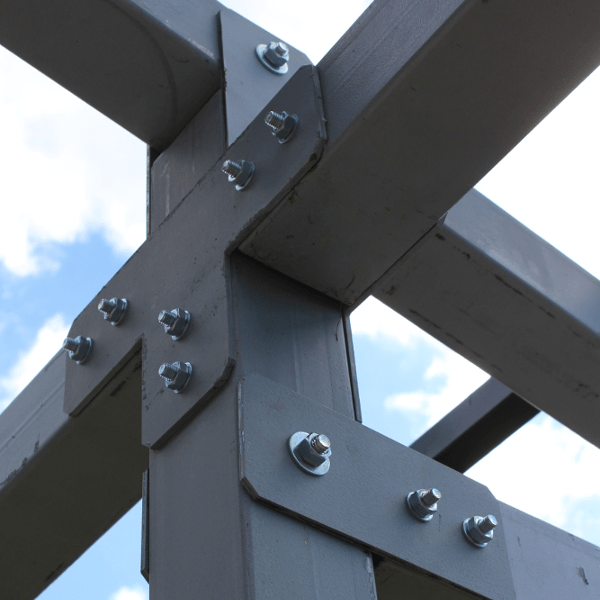
Metal structures are a fundamental component of modern construction, used in both industrial and civil projects. They fall into two main types according to how the components are joined: bolted and welded. Each method has advantages and disadvantages, but this article focuses on the advantages of bolted metal structures over welded structures.
1. Easy assembly and disassembly
One of the greatest advantages of bolted connections is easy assembly and disassembly. This is particularly useful for temporary structures or where existing structures need alteration or modification. Bolts allow quick disassembly without damaging the components, reducing labour and material costs.
2. Faster project completion
Assembling bolted metal structures is usually faster than welding. Welding takes time for surface preparation, the welding itself and cooling the welds. Bolted connections require only drilling holes and tightening bolts, saving considerable time.
3. Quality control
Quality control for bolted connections is easier and more reliable than for welded connections. Bolts can be inspected visually and by checking tightening, whereas welds require specialised non-destructive testing such as ultrasonic testing or radiography. This makes bolted structures more reliable in terms of quality and safety.
4. Less dependence on weather conditions
Welding is often affected by weather conditions such as wind, rain or cold, which can compromise weld quality. Bolts, by comparison, can be fitted in almost any weather, making this method more reliable under adverse conditions.
5. Flexibility in design and alteration
Bolted connections allow greater flexibility in the design and alteration of structures. If the project needs to change, bolted elements can easily be replaced or rearranged. This is particularly important in evolving projects where requirements may change during construction.
6. Reducing the risk of defects
Welding can cause defects such as cracks, porosity or incomplete weld penetration. Bolted connections are less prone to these defects, reducing the risk of structural problems and increasing the structure’s durability.
Bolted metal structures offer many advantages over welded structures: easy assembly and disassembly, faster project completion, better quality control, less dependence on weather, flexibility in design and alteration, and a reduced risk of defects. These benefits make them a preferred choice for many construction and industrial projects, providing structural reliability and efficiency.