
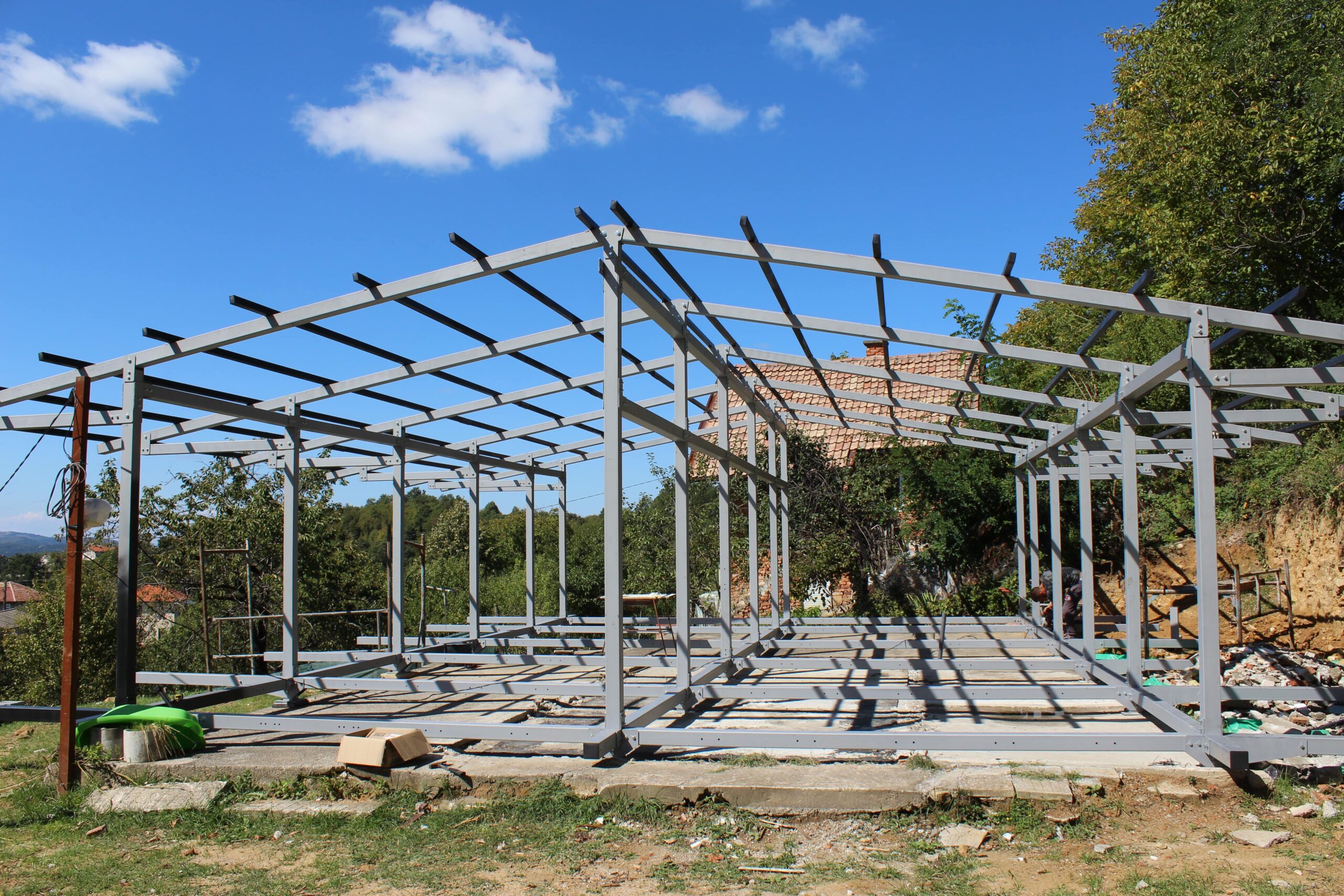
In today’s construction industry, the choice of structural material is a key factor in a building’s sustainability and efficiency. Metal and timber are two of the most commonly used materials. Although timber has a long history as a building material, metal structures are increasingly taking a leading role thanks to their distinctive properties. This article explores why metal structures are lighter, stronger and more durable than timber structures, making them a preferred choice for many modern projects.
Low weight of metal structures
One of the main advantages of metal structures is their low weight. Metals, particularly steel and aluminium, provide high strength at relatively low weight, allowing complex, large structures to be built without heavy foundations. The low weight makes transport and on-site assembly easier, reducing construction time and cost. Timber structures, while also relatively lightweight, require greater thickness and volume to achieve the necessary load-bearing capacity, increasing the structure’s total weight.
Strength of metal structures
Strength is a key factor in the longevity and safety of any structure. Metal, particularly steel, has exceptional tensile and compressive strength, allowing use under high loads such as earthquakes, strong winds or heavy snowfall. Metal can also bend and return to its original shape, giving it a significant advantage under dynamic loads.
Timber, by contrast, has lower tensile and compressive strength, making it more susceptible to deformation and damage under extreme conditions. Although it has good insulating properties and can withstand certain loads, timber cannot match metal structures for strength and durability.
Durability of metal structures
Durability is one of the most important properties of any building material. Metal structures have a significantly longer life than timber structures, especially when properly protected against corrosion. Steel, for example, can last for decades without significant structural changes if treated with suitable protective coatings.
Although timber naturally resists some types of damage, it is vulnerable to moisture, insects and fungi, which can cause the material to deteriorate over time. Extending the life of timber structures requires regular maintenance and chemical treatment, increasing maintenance costs and effort.
Metal structures represent a significant advance in construction, offering a lighter, stronger and more durable alternative to timber structures. Their resistance to extreme conditions, long life and easy maintenance make them a preferred choice for many modern architects and builders. Although timber remains valuable in certain applications, metal continues to dominate as a primary material for durable, safe structures.